19 November 2026
How a 1977 spacecraft, and a photograph it took in 1990, continue to inspire the Blue Dot Network
On 18 November 2026, after almost 50 years in flight, NASA's Voyager 1 reached a distance of one light-day from Earth, about 26 billion kilometres. That is how far light travels in 24 hours. A signal sent from the spacecraft now takes a full day to reach us, and a full day for our reply to reach it.
It is a quiet milestone for a machine launched in the year of the first Star Wars film, yet it carries a particular resonance for those of us working on the Blue Dot Network.
Voyager 1 launched in 1977 carrying artefacts of life on Earth and a message from humanity, intended for anyone who might one day find it. Its primary mission was to study Jupiter and Saturn. Then, on 14 February 1990, with its planetary work complete, it did something unexpected.
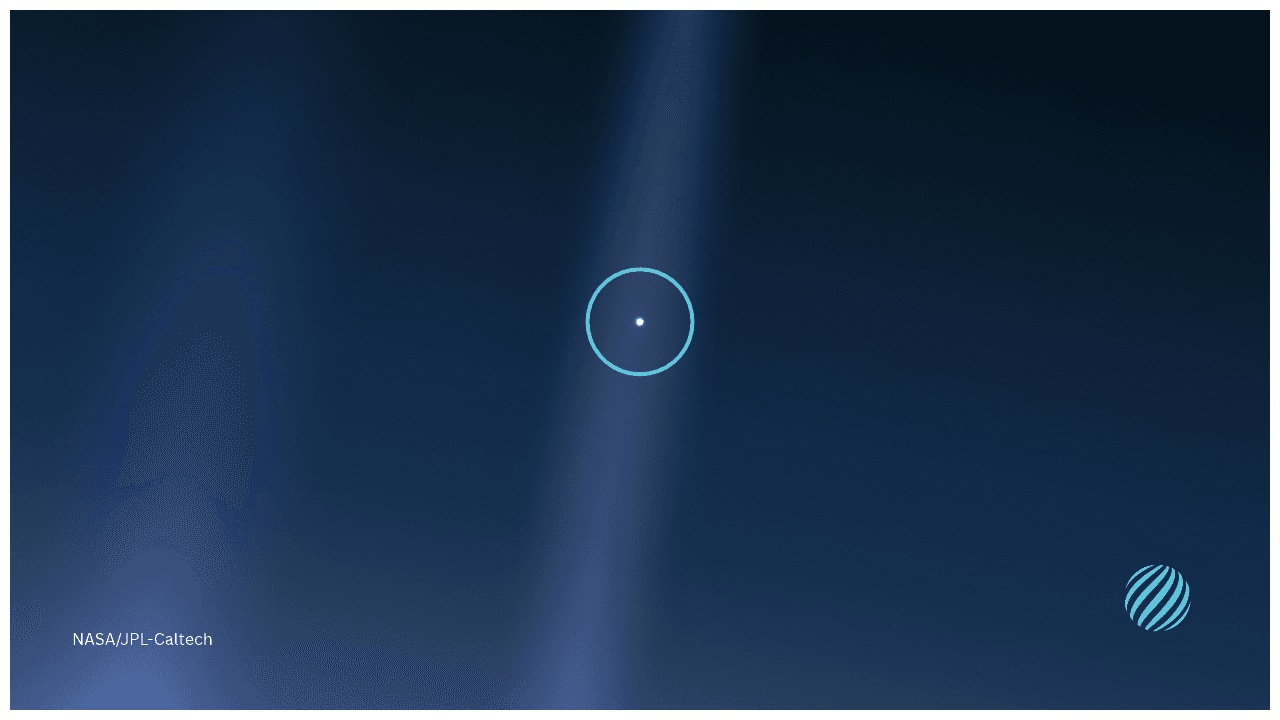
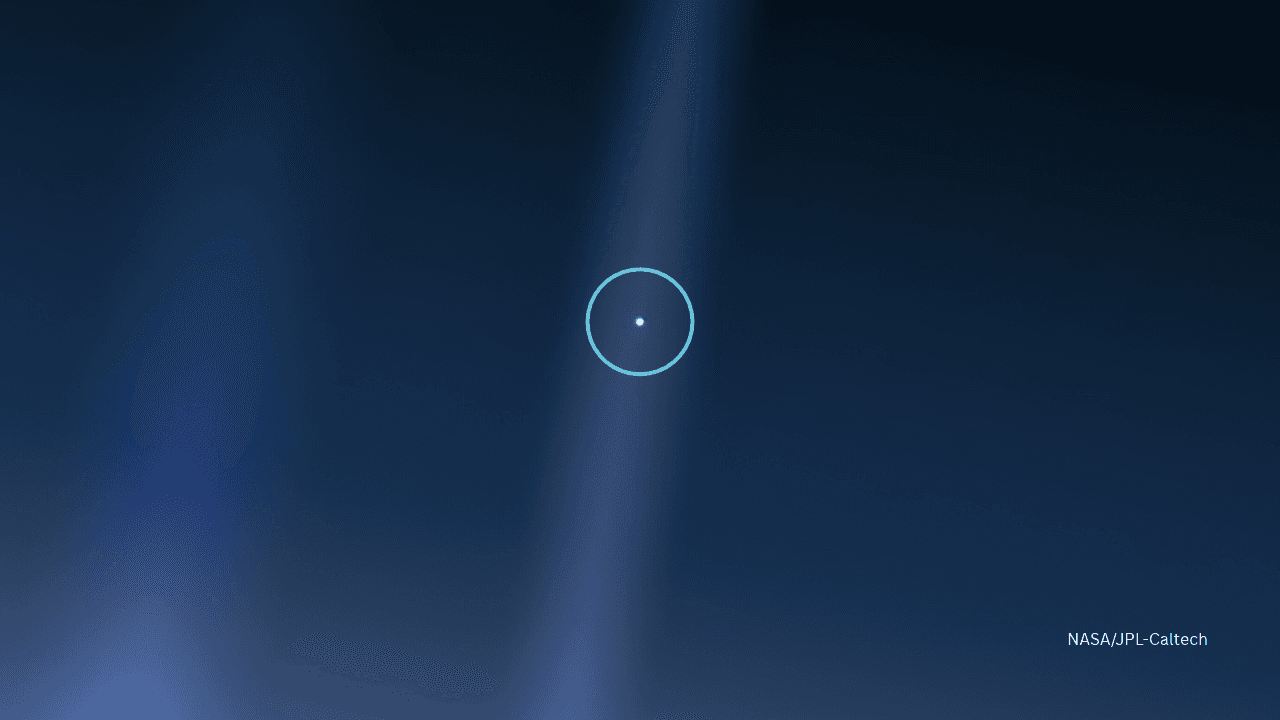
From the outer reaches of the solar system, Voyager 1 turned its camera back towards home for one final time. In the resulting image, Earth is a single pale blue pixel, suspended in a ray of scattered sunlight, 6 billion kilometres away.
The astronomer and science communicator Carl Sagan, who had served as a scientific adviser on the Voyager missions, named the photograph the "pale blue dot." In his book Pale Blue Dot: A Vision of the Human Future in Space, he reflected that everyone we have ever loved, known or heard of lived out their lives on that tiny speck. For Sagan, the image underscored our responsibility to treat one another more kindly and to cherish "the only home we've ever known."
That image and those words are the inspiration for the Blue Dot Network. They frame a simple idea: the ultimate purpose of quality infrastructure is to enhance human well-being while protecting the environment on which all life depends.
Infrastructure underpins how societies connect, trade, learn, grow and recover. Done well, it lifts communities and lasts for generations. Done poorly, it can burden the people it was meant to serve and damage the planet we share. The Blue Dot Network exists to promote the first outcome, through principles of quality, transparency and sustainability that help decision-makers around the world build better.
Quality infrastructure and space exploration have more in common than it might seem. Both are driven by human ingenuity. Both are motivated by a desire to expand the horizons of our existence and to connect us. And both demand long-term thinking: the engineers who built Voyager could not have known they would still be receiving its signals half a century later.
Voyager 1 is now farther from us than any human-made object has ever been, and it is still travelling at roughly 17 kilometres per second. It will take many thousands of years to cover a single light-year. Long before then, its power will fade and it will fall silent.
But the photograph it took endures. It reminds us that Earth is small, shared and fragile, and that what we build on it should reflect that. One light-day out, Voyager 1 is still telling us to look again at that dot.
Photo credit: NASA/JPL-Caltech