22 October 2026
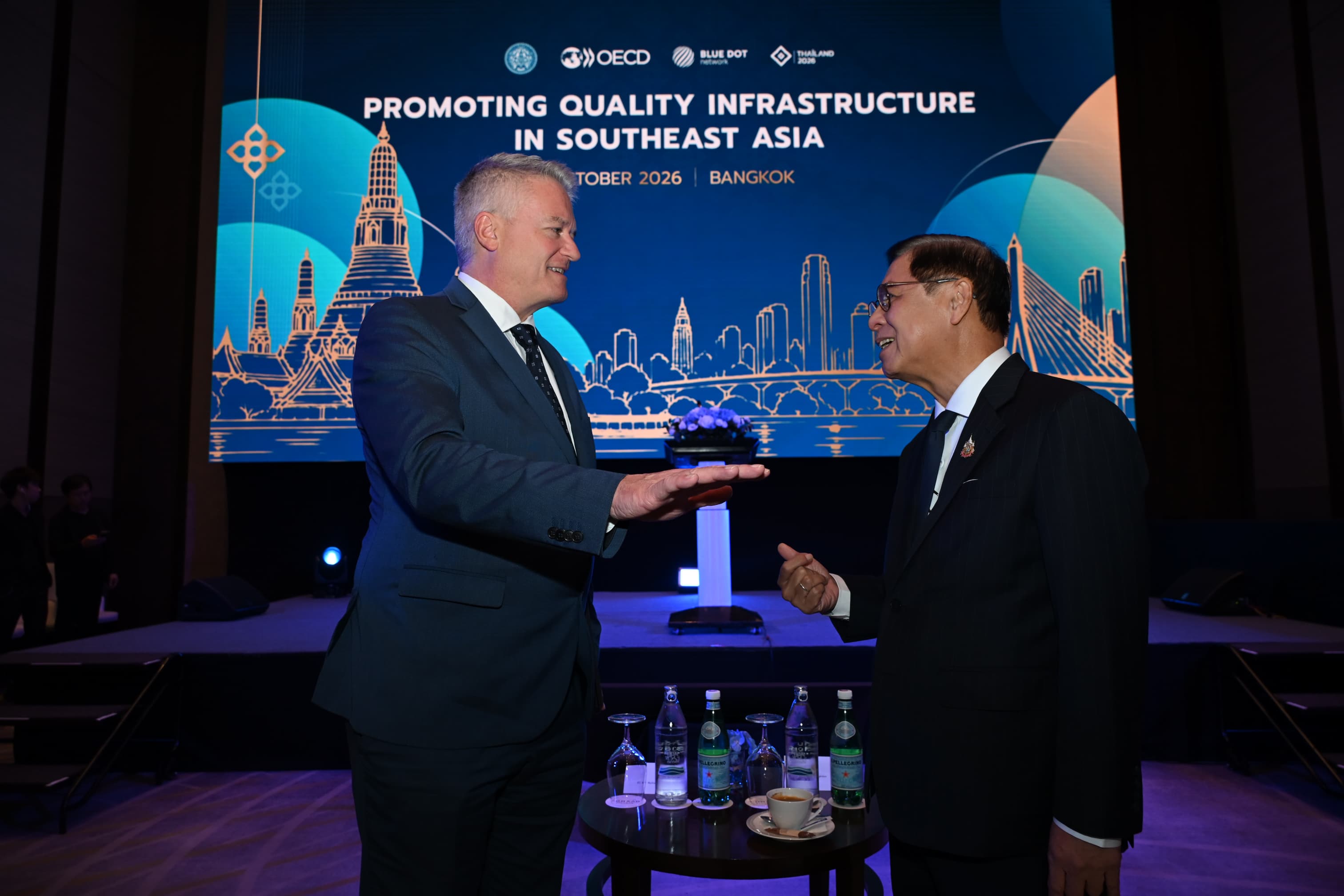
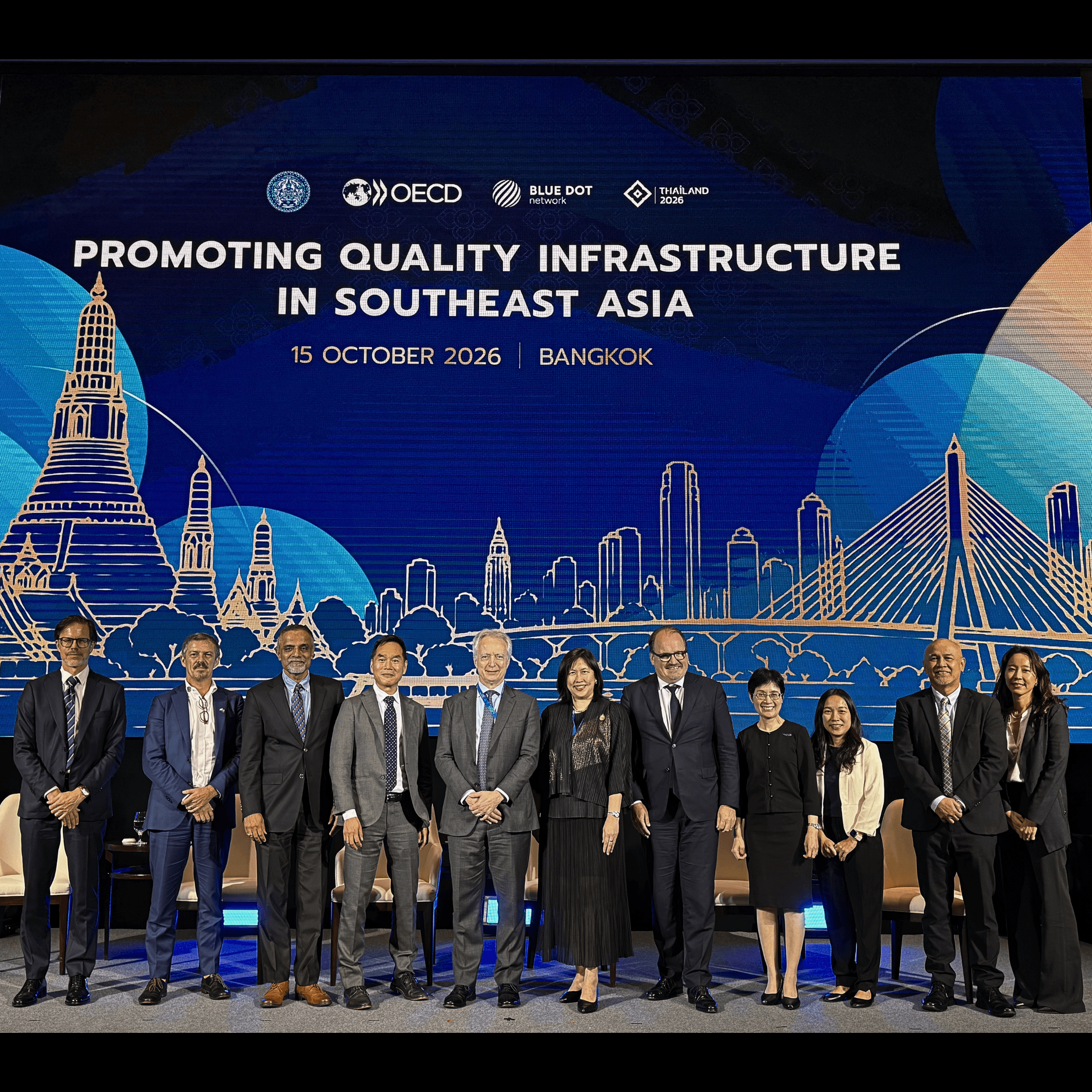
On 15 October, the Blue Dot Network, in partnership with the Ministry of Foreign Affairs of Thailand and the OECD Global Relations and Cooperation Directorate, convened government representatives, development institutions, investors, and infrastructure practitioners in Bangkok for a seminar on Promoting Quality Infrastructure in Southeast Asia. The seminar explored one of the region's most pressing challenges: how to mobilise the private capital needed to close Southeast Asia's infrastructure financing gap while advancing infrastructure that is resilient, sustainable, and aligned with international standards as well as SE Asian countries’ own strategic priorities.
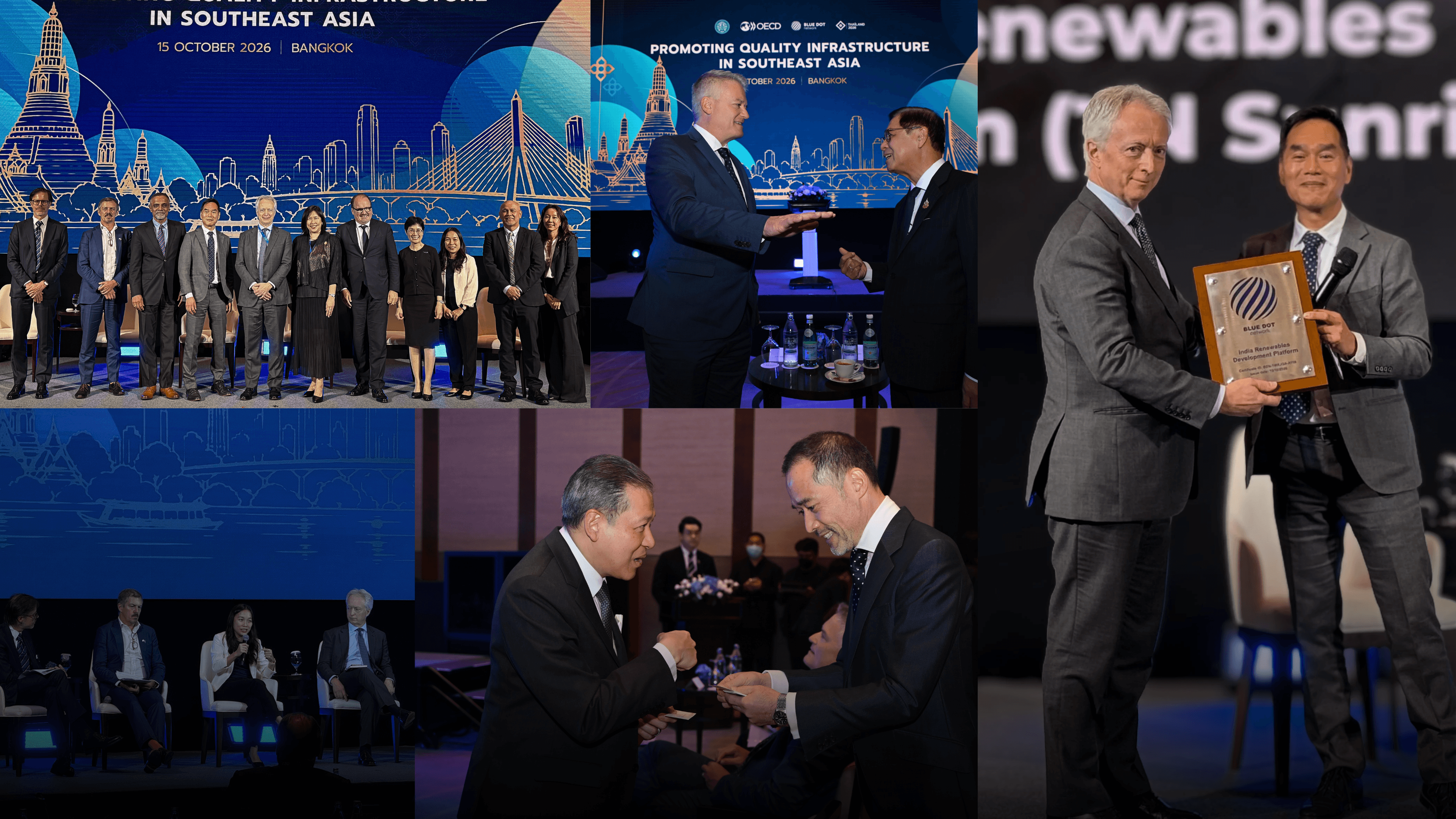
Opening the event, H.E. Sihasak Phuangketkeow, Deputy Prime Minister and Minister of Foreign Affairs of Thailand, and Mathias Cormann, Secretary-General of the OECD, highlighted the growing importance of quality infrastructure investment in supporting Southeast Asia's economic development, energy security, connectivity, and resilience. They underscored the role of international co-operation and the importance of strengthening the pipeline of investable projects capable of attracting long-term private investment. To achieve this, they recognised the important role of standardised and independent certification schemes, such as the Blue Dot Network, to signal to investors that projects are aligned with international standards and best practices, and to provide project owners with a roadmap for meeting investor expectations.
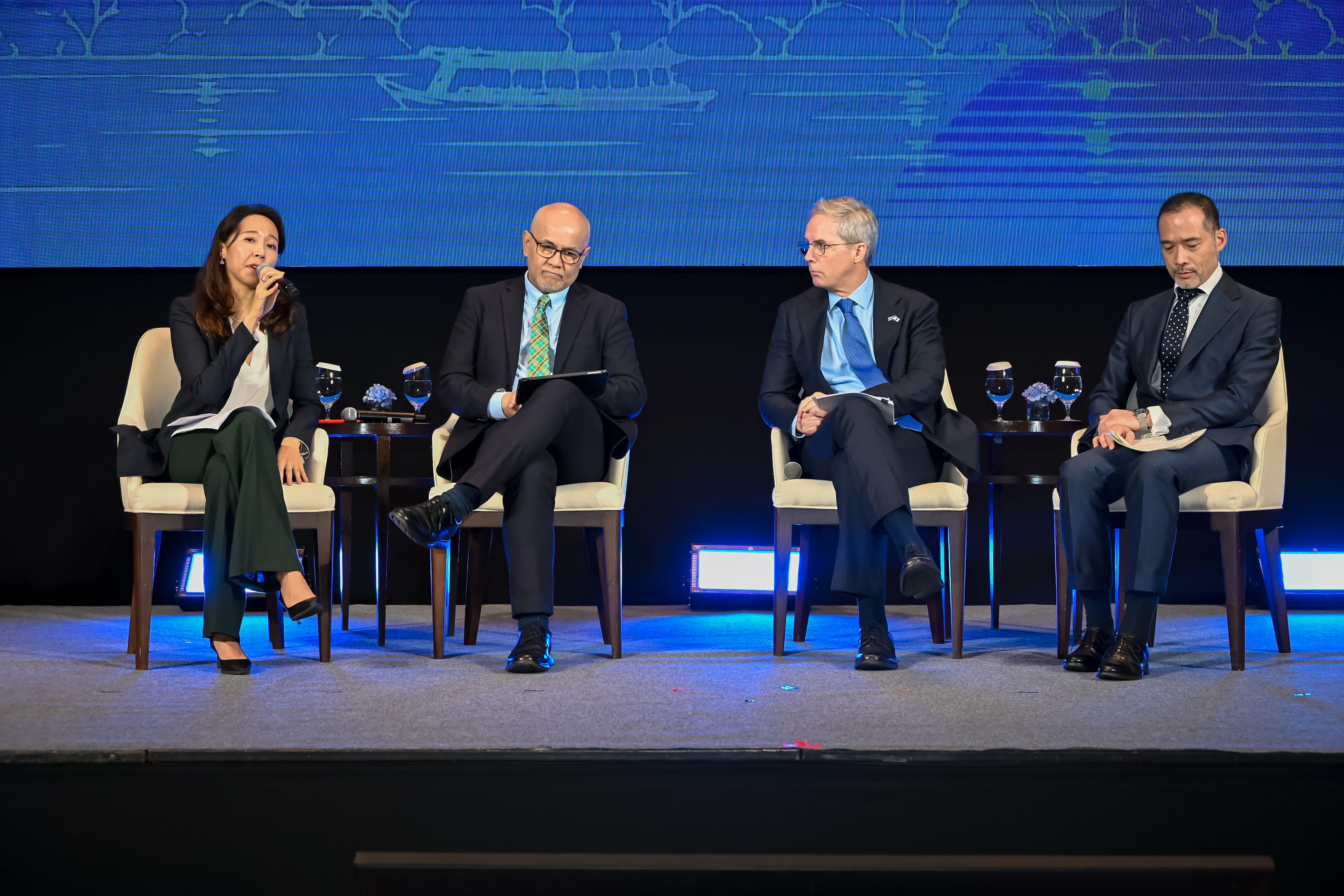
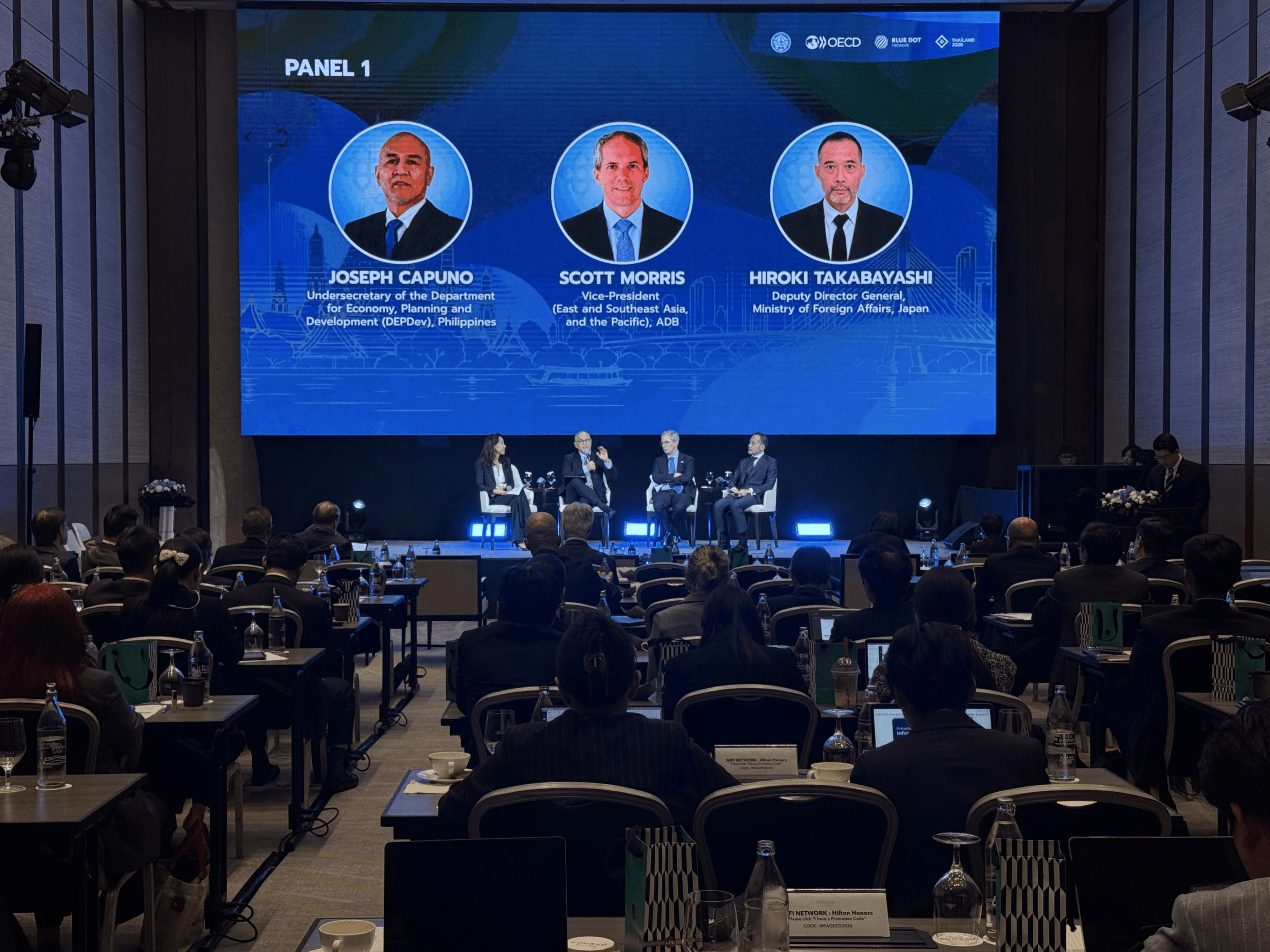
The first panel discussion, Closing the Infrastructure Financing Gap in Southeast Asia, was moderated by Moongyung Lee, Policy Advisor at the Blue Dot Network Secretariat. Bringing together perspectives from government, multilateral development banks and development partners, the session examined why many priority infrastructure projects continue to struggle to secure financing despite strong demand for investment across the region.
Panellists Joseph Capuno, Undersecretary of the Philippines' Department for Economy, Planning and Development, Scott Morris, Vice-President of the Asian Development Bank, and Hiroki Takabayashi, Deputy Director General at Japan's Ministry of Foreign Affairs, highlighted a common challenge: attracting capital requires much more than identifying infrastructure needs. Projects must first demonstrate clear economic value, strong preparation, and a credible path to implementation.
Discussion focused on several priorities for accelerating investment. Participants emphasised the importance of improving project preparation, strengthening feasibility studies, and addressing bottlenecks early in the development process to ensure projects reach bankability. The conversation also highlighted the significance of country ownership, including aligning projects with national development priorities and creating the regulatory and institutional conditions capable of supporting long-term investment.
Speakers further explored how blended finance structures can bring together governments, development finance institutions, and bilateral partners to better allocate risk and crowd in private capital. At the same time, greater standardisation in project preparation and technical requirements was identified as an opportunity to reduce transaction costs, improve efficiency, and accelerate delivery timelines. Development and concessional finance provide not only necessary capital, but they serve to better allocate risk and provide much needed expertise and technical assistance. Ultimately, the panel concluded that closing the investment gap requires stronger project pipelines, clearer investment frameworks, project preparation capacity, and financing solutions tailored to project needs.
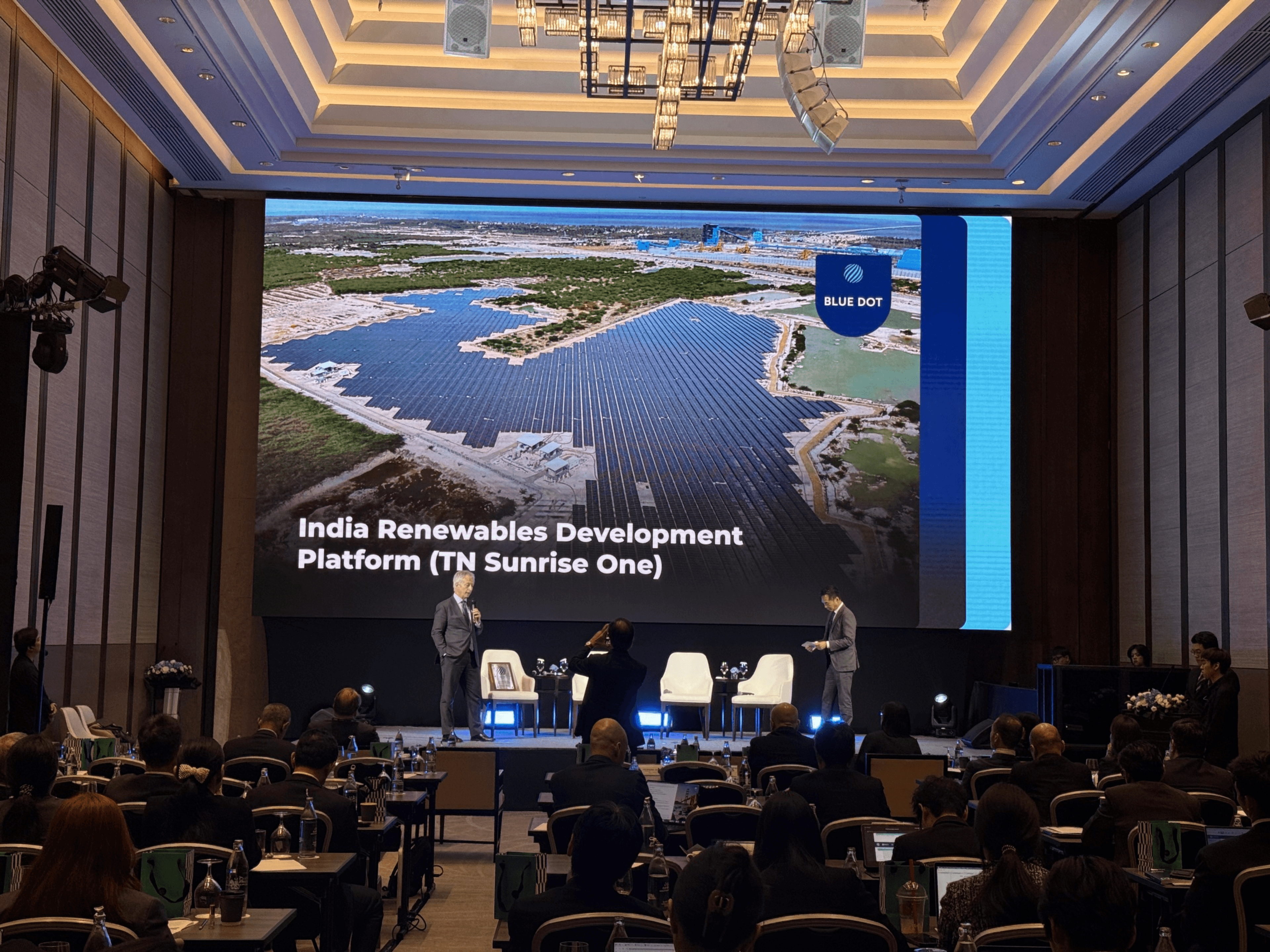
The Blue Dot Network met a significant milestone at the seminar by announcing the certification of the TN Sunrise One project, a 15MW solar power facility in Tamil Nadu, India, developed under the India Renewables Development Platform, a joint venture between the Private Infrastructure Development Group (PIDG) and Radiance Renewables.
Certified by WSP, the project received Blue Dot certification in recognition of its alignment with internationally recognised standards for quality infrastructure. The certification marks two important achievements for the Network: it is the 10th project to receive BDN certification and the first certified project in India.
The certification was presented by Edwin Lau, Head of the Blue Dot Network Secretariat, to Emilio Cattaneo, Global Head of Technical Assistance at PIDG. The announcement served as a tangible example of many of the themes discussed throughout the day's conversations, particularly the importance of project quality, transparency, and investor confidence, and the greater scalability of finance offered by standardised project preparation.
By taking a platform approach to renewable energy development, the India Renewables Development Platform creates opportunities to aggregate projects, improve efficiency, and attract a broader range of investors. The standardised project preparation and delivery processes demonstrated in TN Sunrise One can be duplicated across multiple sites, serving to mobilise investment at scale.
Beyond diversifying energy for commercial and industrial clients, the project also contributes to development objectives through local procurement, job creation, clean energy, and programmes that support women's economic participation and skills development in surrounding communities.
Importantly, the certification highlights the role that trusted, independently verified assessments can play in supporting investor due diligence. By providing greater transparency around project quality and governance, BDN certification can help reduce information barriers, strengthen investor confidence, and support the mobilisation of private capital towards sustainable and resilient infrastructure.
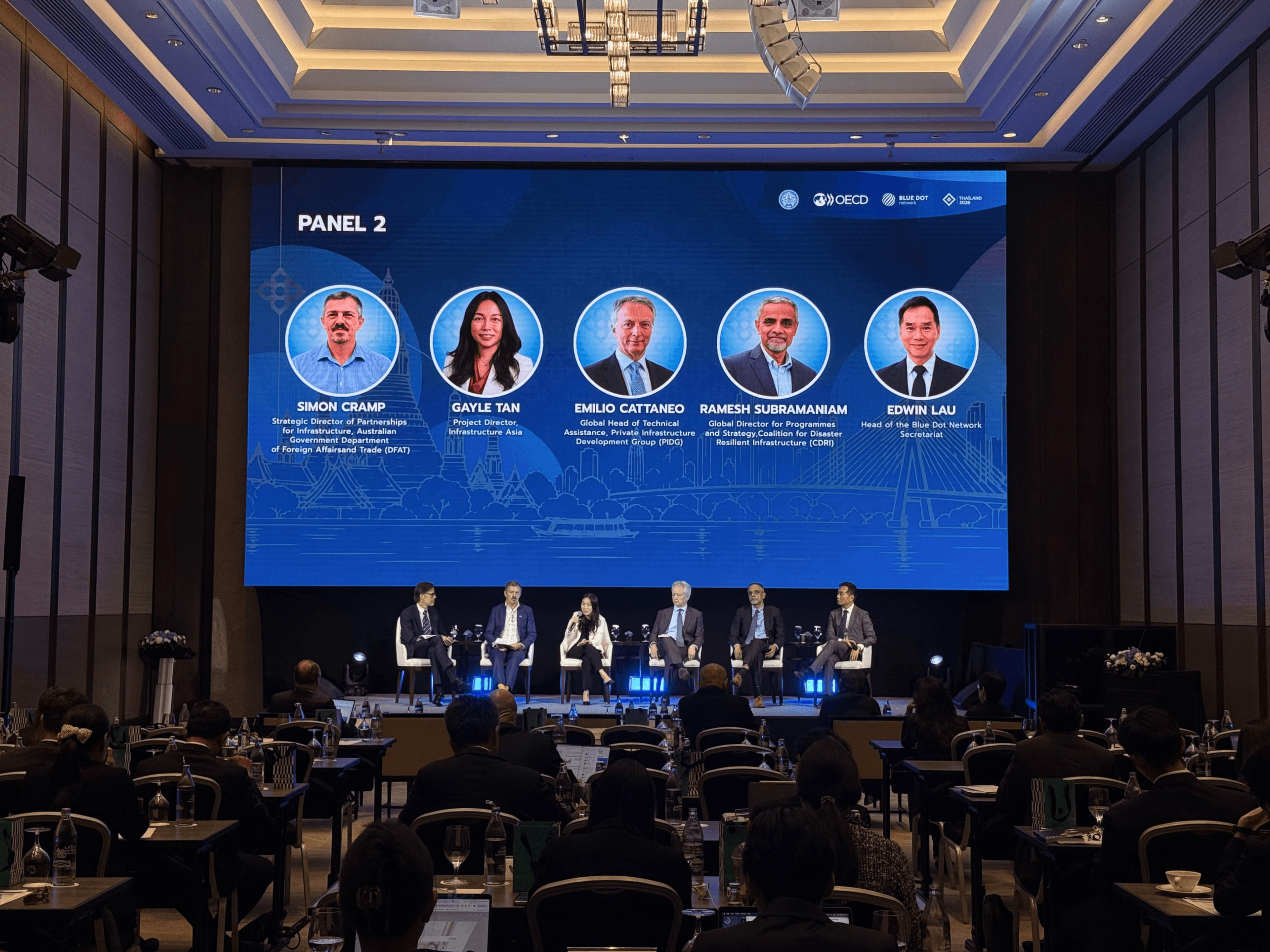
The second session, Attracting Private Capital Investment by Building a Pipeline of Quality Infrastructure Projects in Southeast Asia, was moderated by Juan Garin, Senior Advisor at the Blue Dot Network Secretariat. The discussion brought together representatives from governments, technical assistance providers, resilience organisations and infrastructure finance institutions to examine how Southeast Asia can expand its pipeline of investment-ready projects.
Panellists included Simon Cramp, Director for Private Finance Mobilisation at Australia's Department of Foreign Affairs and Trade, Gayle Tan, Project Director at Infrastructure Asia, Emilio Cattaneo, Global Head of Technical Assistance at the Private Infrastructure Development Group (PIDG), Ramesh Subramaniam, Global Director for Programmes and Strategy at the Coalition for Disaster Resilient Infrastructure (CDRI), and Edwin Lau, Head of the Blue Dot Network Secretariat. Together, they explored the factors that most influence investor confidence and the challenges involved in moving projects from concept to financing.
A recurring theme throughout the discussion was that private investors are attracted not simply by infrastructure demand but by well-prepared opportunities. Panellists stressed the importance of early project preparation, including feasibility studies, market sounding, risk allocation, and the development of robust contractual frameworks. Strong preparation was consistently identified as one of the most important determinants of investment attractiveness.
The session also highlighted the persistent shortage of resources available during the earliest stages of project development. While technical assistance plays a critical role in helping projects reach bankability, demand for support often exceeds available resources. Participants discussed the need to strengthen public-sector capacity, expand project preparation support, coordinate across donors and concessional finance, and develop mechanisms that can help bridge this early-stage financing gap.
Another key focus was resilience. As climate-related and disaster risks increasingly affect infrastructure performance and investment decisions, speakers emphasised that resilience can no longer be treated as an optional addition. A key message was that while awareness of climate risks has increased, implementation must catch-up. This begins with integrating climate and disaster risks into project planning and design from the outset to protect communities, strengthen infrastructure performance, and improve long-term investment outcomes. Only in this way can strengthening infrastructure resilience be seen as an investment rather than as a cost. On this front, progress is visible: evidence of the strong returns of investing in resilience is building, and new tools that enable infrastructure planners and project owners to evaluate these returns are becoming available.
The conversation examined the role of the Blue Dot Network in supporting infrastructure investment by providing a consistent framework for presenting independently-verified project information and signalling adherence to internationally recognised quality standards. Participants noted that clear, transparent, and trusted information can help investors better assess opportunities and support governments seeking to mobilise private capital for infrastructure development. By considering these criteria as part of a comprehensive package of quality elements, BDN certification goes beyond a simple compliance exercise to be a signal of project capacity to deliver on expected outcomes.
Across both sessions, a common message emerged: mobilising private investment requires more than finding the right financial partners. High-quality infrastructure depends on strong project preparation, sound governance, effective risk management, resilience, and long-term planning. By strengthening these foundations, governments and development partners can help build a stronger pipeline of projects capable of attracting private investment and delivering sustainable development outcomes.
As Southeast Asia continues to navigate a rapidly changing economic and geopolitical landscape, initiatives that improve project quality and investment readiness will remain essential. The discussions held throughout the seminar, together with the certification of the TN Sunrise One project, demonstrated the practical steps that governments, development partners, and investors can take to strengthen infrastructure pipelines and mobilise capital at scale. By fostering collaboration and promoting high-quality infrastructure standards, the Blue Dot Network aims to help unlock the investment needed to support the region's long-term growth, resilience, and prosperity.